Style
Portfolio WordPress Themes
22 original Portfolio themes, each with a live demo and one signature interaction.
Strata
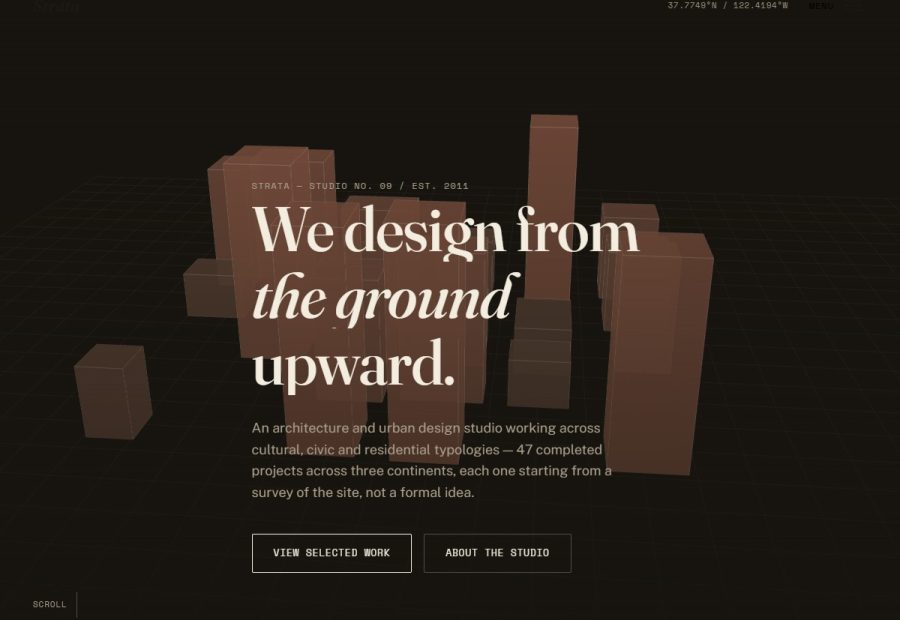
$59A long-form scrollytelling theme for a boutique architecture and urban design studio, opened by a generative WebGL massing hero with an ambient site-survey particle field drifting behind it. Project pages pin image transitions as you scroll and track a cursor-trail interaction, with a Project custom post type built around genuine architectural-drawing detail language. Four purposeful WebGL and Three.js moments run through a warm material palette rather than a single decorative gimmick.
Bloom
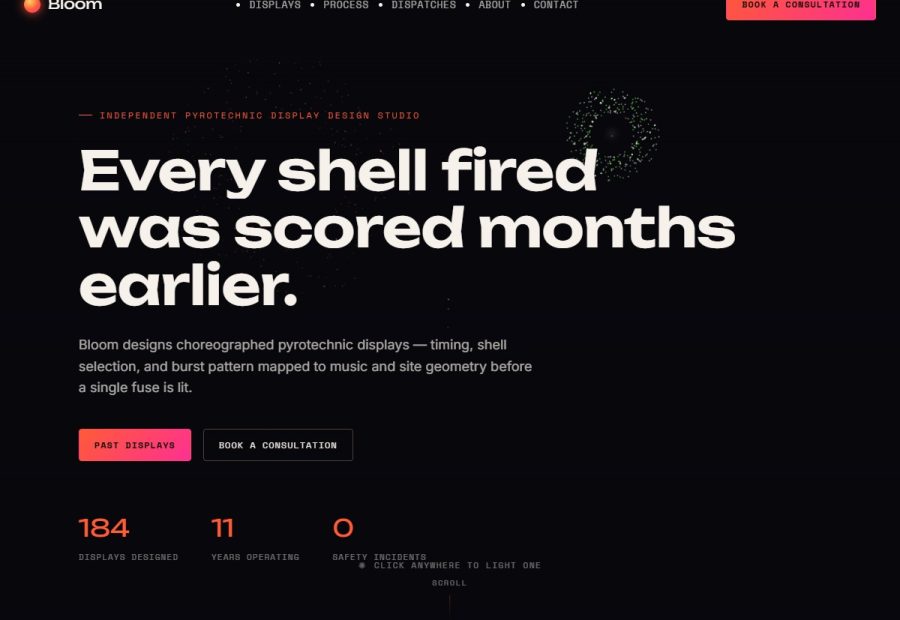
$59A pyrotechnic display design studio theme with a click-to-launch interactive hero firework that visitors set off themselves rather than watch on a loop. Every homepage section runs its own distinct GPU shader effect instead of repeating one background trick from top to bottom, and a Display custom post type archives the studio's past show programs. The palette runs warm ember orange and magenta on near-black throughout.
Weir
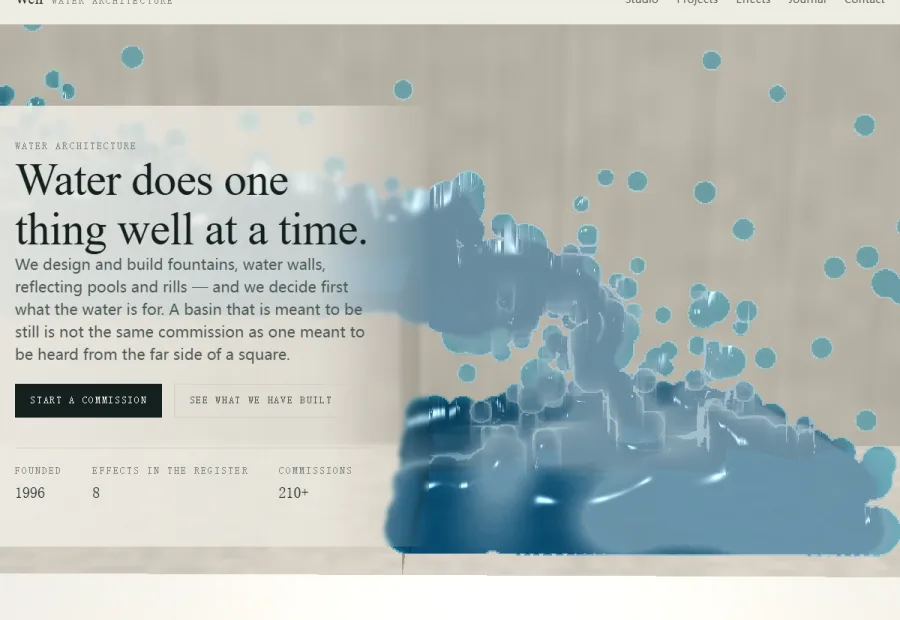
$89Weir is built for architecture and institutional water-feature work, structured around a real WebGL2 fluid engine — continuous fluid surfaces rendered with real-time caustics, not a looping video standing in for water. True to its premise, water does one thing well at a time as you scroll, with CSS scroll timelines pacing each surface change. No page builder sits between the content and the render, keeping the whole site as controlled as the water it depicts.
Serti
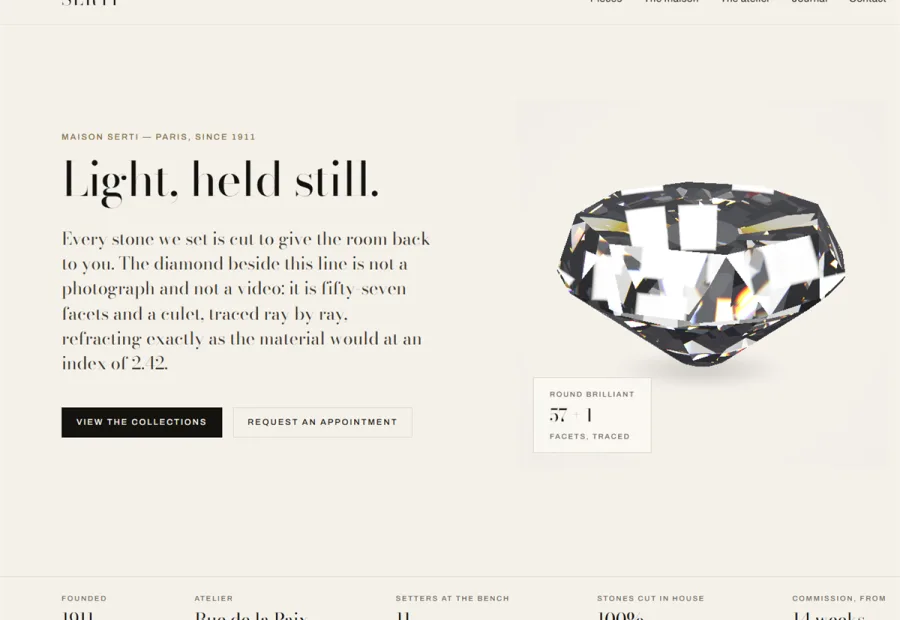
$89Serti is built for fine jewelry and diamond craft, working from the idea that a diamond is a machine for returning light. A real WebGL2 ray tracer renders per-wavelength dispersion and conductor Fresnel reflectance at true-scale calibration, so the gemstone on screen refracts and fires light the way an actual stone would under study, not a generic sparkle shader. CSS scroll timelines pace the reveal, and the whole build runs with no third-party JS.
Sabine
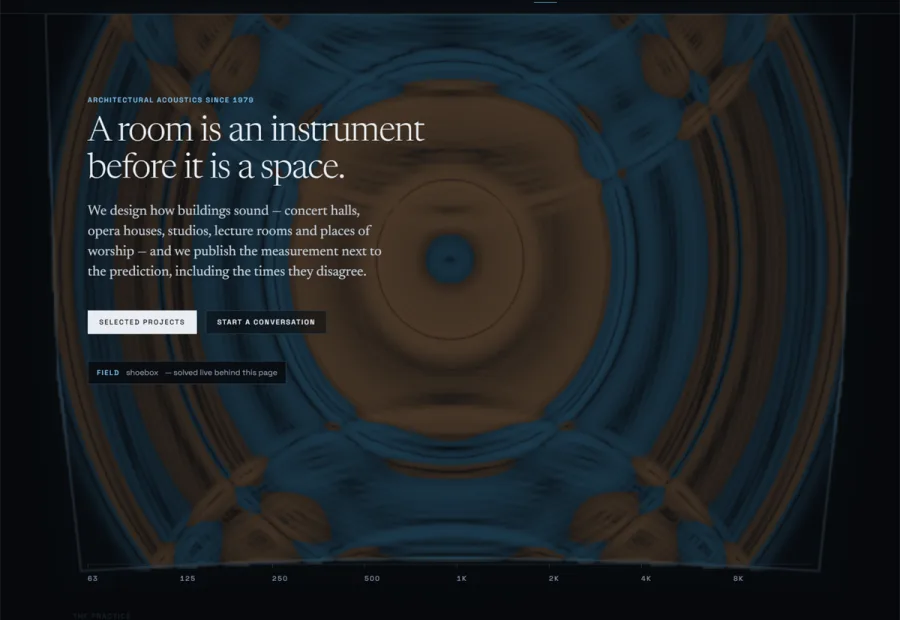
$89Sabine is built for architecture and acoustics practices around one idea: a room is an instrument before it is a space. A real WebGL2 FDTD wave solver propagates sound through an RGBA16F pressure field against genuine Schroeder diffuser geometry, and reverberation time is computed live with the actual Sabine and Eyring equations — the same math run server-side and in the browser. CSS scroll timelines pace the reveal, and the build ships with no third-party JS.

Formwork
$75Comparison is shown, never dragged behind a handle. Formwork's background is a persistent GPU render — planks assemble once on load and dust keeps drifting as you scroll, computed rather than looped — and before/after photography sits fully visible side by side, with deliberately no drag-to-reveal slider hiding half the result. One accent colour is reserved for the interactive layer alone, never washed over a whole section, across long-form real-project showcase pages built for a design-build renovation studio.
 Featured
 Featured
 Featured