Style
Architecture WordPress Themes
15 original Architecture themes, each with a live demo and one signature interaction.
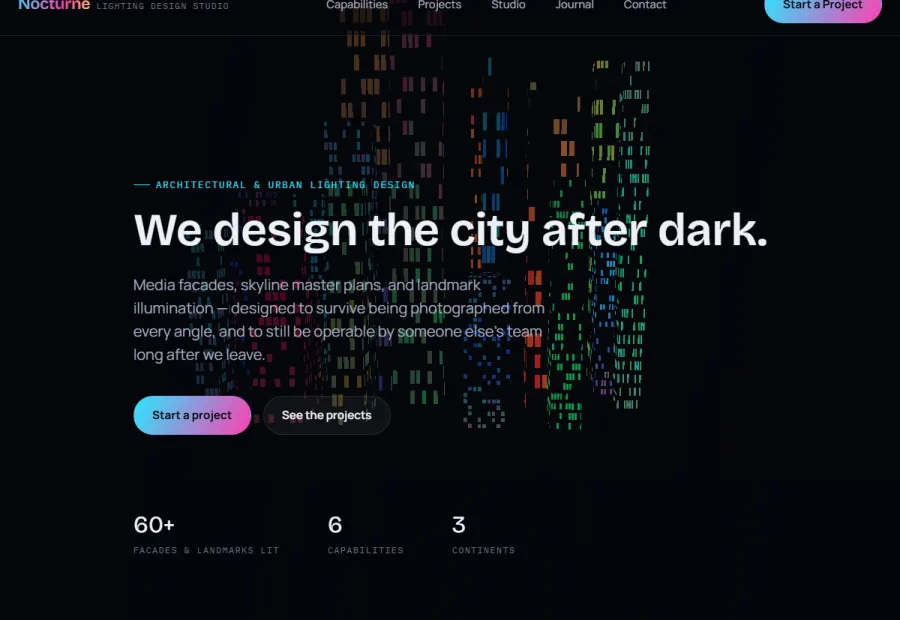
Nocturne
79Nocturne is built for architectural lighting design practices working after dark on real buildings and cityscapes. The hero runs on genuine CC0 architectural-lighting photography behind a scrim rather than a stock-photo placeholder, with glassmorphism cards and scroll-reveal choreography carrying that same low-light mood through the rest of the site. Enquiries route through a real AJAX form, keeping the portfolio's follow-through as considered as its photography.
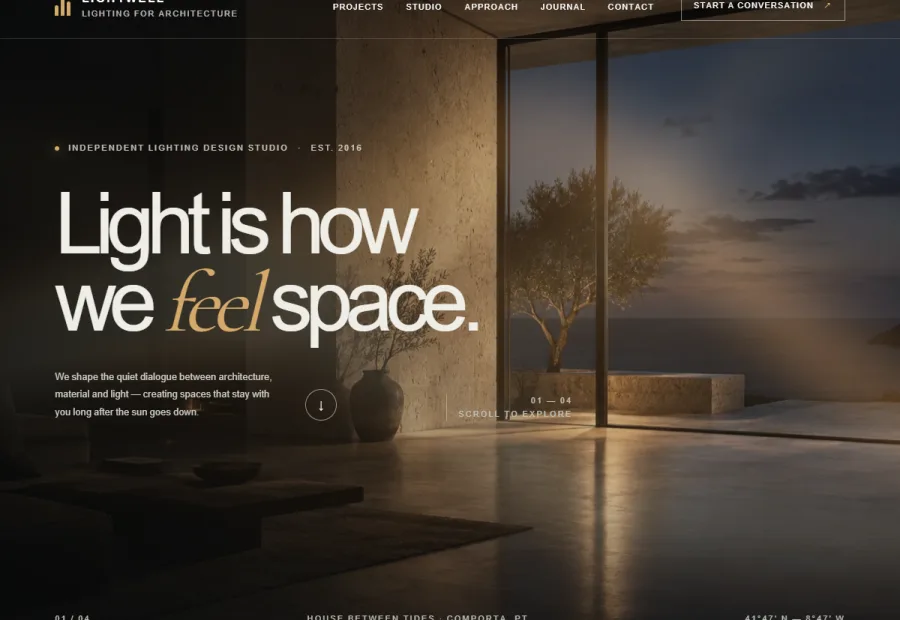
Lightwell Studio
$79Move a light across real stone and watch the incidence angle change: pores throw shadows, bronze holds a pool of light, oak keeps its grain.

Corso
$59Corso is a horizontal, spatial theme for architecture studios, where the homepage works as a promenade you walk sideways through, project by project, instead of scrolling down a feed. That horizontal scroll degrades cleanly to a vertical stack for reduced-motion preferences and mobile, so the concept never breaks accessibility. A Project custom post type tracks year, location, area, and typology alongside a position rail, set in Space Grotesk and Space Mono with a blueprint-cobalt-on-plaster palette.
 Featured
Verre
$79Light, cut by hand — a theme for a stained glass and architectural glass studio, opened by a real WebGL2 analytic Voronoi shader that renders leaded-glass panes as true procedural geometry, not a texture. Procedural SVG patterns carry that same cut-glass language into icons and dividers, while GSAP, ScrollTrigger and SplitText choreograph panels and text into place as you scroll. Custom post types catalogue the studio's work, with AJAX powering filtering.
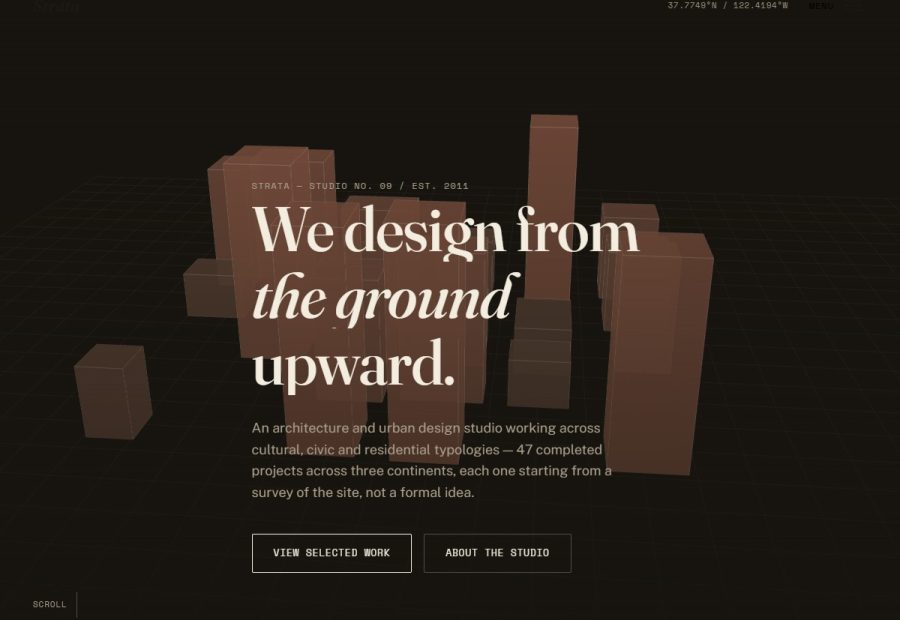
Strata
$59A long-form scrollytelling theme for a boutique architecture and urban design studio, opened by a generative WebGL massing hero with an ambient site-survey particle field drifting behind it. Project pages pin image transitions as you scroll and track a cursor-trail interaction, with a Project custom post type built around genuine architectural-drawing detail language. Four purposeful WebGL and Three.js moments run through a warm material palette rather than a single decorative gimmick.
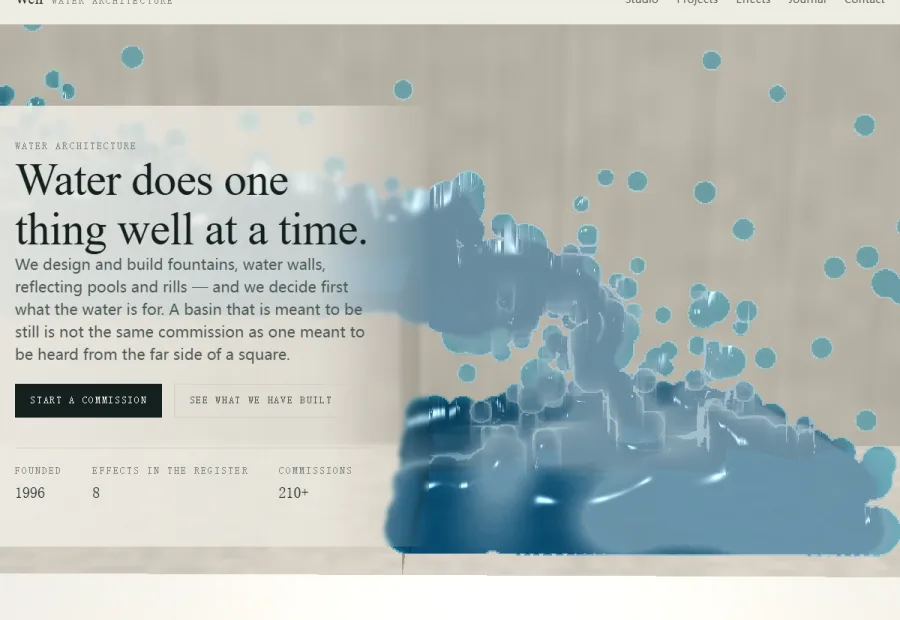
Weir
$89Weir is built for architecture and institutional water-feature work, structured around a real WebGL2 fluid engine — continuous fluid surfaces rendered with real-time caustics, not a looping video standing in for water. True to its premise, water does one thing well at a time as you scroll, with CSS scroll timelines pacing each surface change. No page builder sits between the content and the render, keeping the whole site as controlled as the water it depicts.
Sabine
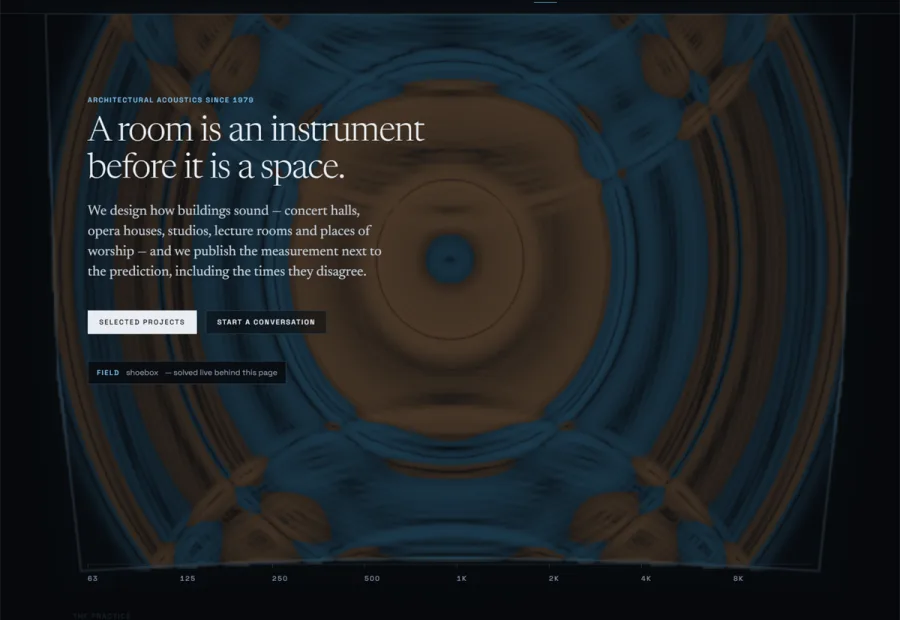
$89Sabine is built for architecture and acoustics practices around one idea: a room is an instrument before it is a space. A real WebGL2 FDTD wave solver propagates sound through an RGBA16F pressure field against genuine Schroeder diffuser geometry, and reverberation time is computed live with the actual Sabine and Eyring equations — the same math run server-side and in the browser. CSS scroll timelines pace the reveal, and the build ships with no third-party JS.
 Featured
Rill
$89The glow and the water are one system. Rill runs a real-time WebGL2 shallow-water simulation — an actual finite-difference solution of the 2D wave equation — and samples its height field on the CPU to drive a live glass inner-glow, layered over genuine backdrop-filter refraction rather than a static blur. Installation and Material are cross-linked custom post types built around that same glass system, with an AJAX commission enquiry form for studio leads.

Cavity Acoustics
$95Tune the room, hear the room — a real convolution. Cavity Acoustics runs an actual image-source-method room simulator: visitors adjust dimensions and materials and hear the resulting reverberation through genuine convolution, not a canned preset. The palette is deep blue-grey and bone-white with a signal-amber action colour and cyan reserved strictly for data traces, and every card carries a corner-bracket oscilloscope-bezel motif — built for an architectural-acoustics consultancy, not a generic music or audio site.

Formwork
$75Comparison is shown, never dragged behind a handle. Formwork's background is a persistent GPU render — planks assemble once on load and dust keeps drifting as you scroll, computed rather than looped — and before/after photography sits fully visible side by side, with deliberately no drag-to-reveal slider hiding half the result. One accent colour is reserved for the interactive layer alone, never washed over a whole section, across long-form real-project showcase pages built for a design-build renovation studio.

Lantern
$95The page isn't styled — it's lit. Lantern drives the whole page from registered, @property-typed custom properties carrying a live lighting state — key, wash, haze, tint — so scrolling runs a literal lighting cue stack rather than a scroll animation. The hero renders volumetric light beams through haze off the main thread, a desk scene mixes six lanterns additively in linear light, and colour is authored in OKLCH because a dimmer is fundamentally a lightness axis; the whole layout is built as a cue sheet aligned on CSS subgrid.

Verrière
$89The page is built as a leaded light. Verrière sets content inside irregular, hand-built glass quarries separated by real lead cames instead of a rectangular card grid, with an SVG-filter antique-glass texture on every pane. A scroll-driven sun angle relights every pane live through @property-typed custom properties for genuinely smooth interpolation, saturated ruby, cobalt, emerald and amber sit on near-black lead, and a fixed vertical navigation rail replaces the usual top bar and full-viewport photo hero.